This Blog is only Based on education reference. The main motive is to aware visitors with knowledge regarding the topic from government exam. Hope you like it.
Translate Your Page
Wednesday, January 09, 2019
Mutual Fund And Its Type
Tuesday, January 08, 2019
Term for mutual fund
1. Arbitrage Fund
Definition: Arbitrage fund is a type of mutual fund that leverages the price differential in the cash and derivatives market to generate returns. The returns are dependent on the volatility of the asset. These funds are hybrid in nature as they have the provision of investing a sizeable portion of the portfolio in debt markets.
invest predominantly in equities, their tax treatment is at par with equity funds.
2. Benchmark
Nifty of the Indian stock market with which mutual fund returns are compared.
Description: If a fund returned 59% in a particular year, but the benchmark Sensex returned 70%, this infers the fund underperformed compared to the Sensex benchmark.
A benchmark indicates directly the fund managers performance. For instance, a mutual fund which outperforms the benchmark is a sign of an efficient fund manager.
Central government.
of the two avenues to investors for entering or exiting.
The closed-ended funds are free from the worry of regular and sudden redemption and their fund
managers are not worried about the fund size.
lending and credit worthiness of the entity or the person obtained from the statements of its assets and liabilities with an aim to determine their ability to meet the debt obligations. It helps in assessment of the solvency of the particular entity. These ratings based on detailed analysis are published by various credit rating agencies like Standard & Poors, Moodys Investors Service, and ICRA, to name a few.
Gilt fund, monthly income plans (MIPs), short term plans (STPs), liquid funds, and fixed maturity plans
(FMPs) are some of the investment options in debt funds. Apart from these categories, debt funds include various funds investing in short term, medium term and long term bonds.
Description: Debt funds are preferred by individuals who are not willing to invest in a highly volatile equity market. A debt fund provides a steady but low income relative to equity. It is comparatively less volatile.
sensitivity to change in interest rates. To be specific, it measures the change in market value of security
due to 1% change in interest rates.
This fee is generally referred to as a load. Entry load can be said to be the amount or fee charged from an investor while entering a scheme or joining the company as an investor.
This fee charged is generally referred to as a load. Exit load is a fee or an amount charged from an investor for exiting or leaving a scheme or the company as an investor.
schemes of mutual funds. Different mutual funds houses charge different fees as an exit load.
10. Treasury Bills
Description: T- bills are issued to meet short-term mismatches in receipts and expenditure. Bonds of longer maturity are called dated securities.
11. Trustee
Description: Trustee is supposed to make profitable decision for the entity under it authorization. It is a
legal relationship between the trustee and the party, where the trustee is totally responsible for the
maintenance, performance, and profitability of the trust under his guidance. Usually the trustee is not to make any profits, for himself, using the resources of the trust.
12. Ultra Short Term Funds
Description: Ultra short-term funds help investors avoid interest rate risks, yet they are riskier and offer
better returns than most money market instruments. Liquid and ultra short-term funds are similar on
various lines, yet there are differences between a liquid fund and an ultra short-term fund.
13. Yield To Maturity
maturity date, the rate of return that it will generate will be Yield to Maturity.
Description: Calculation of YTM is a complex process which takes into account the following key factors:
1. Current Market Price
2. Par Value
3. Coupon Interest Rate
4. Time to maturity
14. Systematic Investment Plan
Definition: Systematic Investment Plan is an investment strategy wherein an investor needs to invest the same amount of money in a particular mutual fund at every stipulated time period.
Description: Investing in SIP enables an investor to take part in the stock markets without actively timing them and he/she can benefit by buying more units when the price falls and less units when the price rises.
This scheme helps reduce the average cost per unit of investment through a method called Rupee Cost
Averaging.
For Example: A person invests Rs 1000 for ten months in SIP. We will find out that the actual average purchase cost of asset would be lower than the average NAV of his investment over 10 months, which is the key benefit of Rupee Cost Averaging.
Actual average purchase cost as per SIP = (1000X10)/ (100+200+67+71+67+50+45+40+37+34) = 14.06
15. Systematic Transfer Plan
amount in a scheme and regularly transfer a fixed or variable amount into another scheme.
Description: In case of a volatile market, STP helps the investors to periodically transfer funds from one
scheme (source scheme) to another (target scheme) and help them save the effort and time by
compressing multiple instructions required for redemption from one scheme to invest in the other into a single instruction.
Transfers are usually made from debt funds to equity funds if the market is doing well and vice versa if the market is not performing well. The STP can be classified based on the amount transferred from the source scheme to the target scheme. If a fixed sum is transferred from the source to the target scheme, then its called Fixed STP, and if the sum transferred is the profit part of the investment of source scheme, then its called Capital Appreciation STP.
16. Systematic Withdrawal Plan
variable amount from his mutual fund scheme on a preset date every month, quarterly, semi annually or
annually as per his needs.
Description: An investor can customize the cash flows as desired; he can either withdraw a fixed amount or just the capital gains on his investments. SWP provides the investor with a regular income and returns on the money that is still invested in the scheme.
For Example: You have 8,000 units in a MF scheme. You have given instructions to the fund house that you want to withdraw Rs. 5,000 every month through SWP.
On 1 January, the NAV of the scheme is Rs. 10.
Equivalent number of MF units = Rs. 5,000/Rs. 10 = 500
500 units would be redeemed and Rs. 5,000 would be given to you.
Your remaining units = 8,000 - 500 = 7500
333 units would be redeemed from your MF holdings, and Rs. 5,000 would be given to you.
withdrawals.
17. Sortino Ratio
the denominator, Frank A Sortino uses downside deviation in the denominator.Standard deviation involves both the upward as well as the downward volatility.
Since investors are only concerned about the downward volatility, Sortino ratio presents a more realistic picture of the downside risk ingrained in the fund or the stock.
18. Style Box
19. Swap
concerned. This exchange takes place at a predetermined time, as specified in the contract.
Description: Swaps are not exchange oriented and are traded over the counter, usually the dealing are
oriented through banks. Swaps can be used to hedge risk of various kinds which includes interest rate risk and currency risk. Currency swaps and interest rates swaps are the two most common kinds of swaps traded in the market.
20. Sector Specific Funds
fund. As these funds take exposure in a single sector, the concentration risk is high. Their performance is aligned with the performance of the sector in which they are investing. As the exposure is not broad based, it carries a high degree of risk. This type of funds is normally suitable for a highly aggressive investor.
Banking funds: These are sector-specific mutual funds having a portfolio comprising mainly of
equities of different banks. So if in general the banking sector is performing well, one can expect
good returns.
different pharmaceutical companies.
companies.
21. Expense Ratio
percentage of asset funds to cover the expenses. Suppose the expense ratio is 1 per cent and your
investment is Rs 10,000, then Rs 100 is what you pay to the company as operating fee.
Major components of the cost are like legal cost, administration cost, advertising cost and the
management cost. This fee is different from the sales fee and commission or the expenses incurred on the buying and selling of portfolio.
22. Geometric Average Return
compounded. It is used to calculate average rate per period on investments that are compounded over
multiple periods.
23. Gold Fund
physical gold or stocks of gold mining companies. Gold funds which invest in physical gold offer investors the convenience of buying pure gold at low cost. There is no possibility of theft and you can sell these units at market linked prices anytime.
Description: There are various types of gold funds across the globe:
Gold Mining Funds: These funds invest in gold mining companies and returns from such funds are
dependent on the performance of these companies. Investment demand for gold is borne out of the
economic uncertainties as gold is considered to be a safe heaven when equity markets are tumbling.
Dichotomy between demand and supply also govern the gold prices.
Inflation and its types
Inflation
The general rise in the price level of goods and services.
It is estimated as the percentage rate of change in price index over the reference time-period.
Currently in India inflation rate is measured with the help of Consumer Price Index- combined (Base year- 2012).
Till April 2014, Inflation rate was measured with the help of WPI (Wholesale Price Index).
Rate of Inflation= (Current period price index-Reference period price index)/(Reference Period Price Index)×100
Type of Inflation
Based on rate of rising in Inflation
1. Creeping Inflation
Price rise at very small rate (< 3 %)
It is considered safe and essential for the economy.
2. Walking or Trotting Inflation
Price rise at moderate rate (3 % < Inflation < 10 %)
Inflation at this rate is a warning signal for the Economy.
3. Running Inflation
Price rise at high rate (10 % < Inflation < 20 %)
It affects economy adversely.
4. Hyperinflation or Galloping Inflation or Runway Inflation
Price rise at very high rate (20 % < Inflation < 100 %)
This situation brings total collapse of Economy.
Based on causes
Demand Pull Inflation: When Inflation arises due to higher demand for goods and services over the limited supply.
Cost Push Inflation: When Inflation arises due to higher input cost (Example- raw material, wages etc.) for goods and services over the limited supply.
Other definitions-
1. Deflation
It is opposite to Inflation.
Reduction of general level of price in an economy.
In this price index measured is negative.
2. Stagflation: When stagnation and inflation coexist in the economy.
3. Stagnation: low national income growth and high unemployment.
4. Disinflation
When the rate of Inflation is at a slower rate.
Example:
If the Inflation of last month was 4 % and rate of inflation in the current month is 3 %.
5. Reflation:
Deliberate action of government to increase the rate of inflation to redeem economy from a deflationary situation.
6. Core Inflation:
It is a measure of price rise in the economy excluding the price rise of some products (whose price is volatile and temporary in nature.
Effects of Inflation
1. Redistribution of income and wealth
Due to the effect of inflation, some group of people loses and another group of people gains.
Example-
In case of debtors and creditors
Debtor- gainer
Creditor- loser
In case of Producers and Consumers
Producer- gainer
Consumer- loser
2. Effects on Production and Consumption
Due to inflation, the demand decreases which curtails the production.
People try to use fewer services which lead to decrease in consumption.
3. Unfavorable Balance of Payments
Export decreases and import increases from other countries which lead to decrease in forex reserve.
Measures to control Inflation
1. Credit control-
It is used by RBI.
2. Increase in Direct Taxes
Due to increase in direct taxes, people have less money available to them and low demand from them leads to a lower price.
3. Price Control
By fixing maximum price limit by authorities.
4. Trade measures
Maintain proper supply in the economy by export and import of goods and services.
Various Price Indices in India
Price Indices in India
Various weighted price indices are calculated in India.
These are-
1. Wholesale Price Index (WPI)
2. Old Consumer Price Index
(a) Consumer Price Index for Industrial Workers (CPI- IW)
(b) Consumer Price Index for Urban Non- Manual Employees (CPI- UNME)
(c) Consumer Price Index for Agriculture Labourers (CPI-AL)
(d) Consumer Price Index for Rural Labourers (CPI- RL)
3. New Consumer Price Index (Introduced in February 2011)
(a) CPI (Rural)
(b) CPI (Urban)
(c) CPI (Combined)
4. Consumer Food Price Index
Till April 2014, the Inflation rate was measured with the help of WPI (Wholesale Price Index).
Currently, in India inflation rate is measured with the help of Consumer Price Index- combined.
1. Wholesale Price Index-
It measures the change in the price of commodities traded in the wholesale market.
It is also known as headline inflation.
Current base year- 2011-12.
The index basket of the current series has a total of 697 items (117 items for Primary Articles, 16 items for Fuel & Power and 564 items for Manufactured Products.)
Published by- Economic Advisor, Ministry of Commerce & Industry.
2. Old Consumer Price Index-
(a) Consumer Price Index for Industrial Workers (CPI- IW)
It measures the change in the price of commodities consumed by industrial workers.
Current base year- 2001
Published by- Labour Bureau
Consumer Price Index for Urban Non- Manual Employees (CPI- UNME)
It measures the change in the price of commodities consumed by Non- Manual Employees.
Published by- CSO (Central Statistics Office, Ministry of Statistics)
It has been discontinued.
(b) Consumer Price Index for Agriculture Labourers (CPI-AL)
It measures the change in the price of commodities consumed by agriculture labourers.
It is a subset of CPI-RL.
Current base year- 1986-87
Published by- Labour Bureau
Used for revising minimum wages
(c) Consumer Price Index for Rural Labourers (CPI- RL)
It measures the change in the price of commodities consumed by rural labourers (include agriculture labourers, labourers of village and cottage industries).
Current base year- 1986-87
Published by- Labour Bureau
Used for revising minimum wages.
3. New Consumer Price Index (Introduced in February 2011)
(a) CPI (Rural)
Current base year- 2012
Published by- CSO (Central Statistics Office, Ministry of Statistics)
(b) CPI (Urban)
Current base year- 2012
Published by- CSO
(c) CPI (Combined)
Current base year- 2012
Published by- CSO
Currently, in India inflation rate is measured with the help of Consumer Price Index- combined.
4. Consumer Food Price Index-
It is a measure of change in retail prices of food items consumed by the people.
Current base year- 2012
Published by- CSO
Others
Urjit Patel committee
The committee was appointed to examine the current monetary policy framework of the Reserve Bank of India.
Major Recommendations of the committee are-
(a) CPI range should be between 4 % +/-2 %.
(b) Repo rate always should be more than CPI.
(c) Proposed formation of Monetary Policy committee to fix accountability.
(d) Government to help RBI to achieve set targets.
GDP Deflator
Used to calculate overall price rise.
Known as implicit price deflator.
GDP Deflator= (Nominal GDP/Real GDP) × 100
Here Real GDP- GDP calculated at constant Price
Nominal GDP- GDP calculated at current Price
The GDP deflator is the most accurate because it covers all goods and services produced in the economy. The other indices (WPI and CPI) derive from price quotations for select commodity baskets.
The government does not use it because GDP deflator data comes quarterly (not weekly/monthly basis).
Regulatory (Apex) Bodies in Financial sector in India
RBI (Reserve Bank of India)
RBI was established in April 1935 under Reserve Bank of India, 1934.
On the recommendation of Hilton-Young Commission.
Central Bank of India which was nationalized in 1949.
Central office initial was established in Calcutta and later moved to Mumbai in 1937.
Official Directors- Governors and not more than fourdeputy governors.
Currently following persons are on following posts-
Governor- Dr Urjit R. Patel
RBI performs his function under the guidance of the Board of financial supervision.
Board for Financial Supervision (BFS)-
Constituted in November 1994.The Board is constituted by co-opting four Directors from the Central Board and is chaired by the Governor.
Important Acts Administered by RBI-
(i) Reserve Bank of India Act, 1934
(ii) Public Debt Act, 1944/Government Securities Act, 2006
(iii) Government Securities Regulations, 2007
(iv) Banking Regulation Act, 1949
(v) Foreign Exchange Management Act, 1999
(vi) Securitisation and Reconstruction of Financial Assets and Enforcement of Security Interest (SARFAESI) Act, 2002
Other Relevant Acts-
(i) Negotiable Instruments Act, 1881
(ii) Companies Act, 1956/ Companies Act, 2013
(iii) Deposit Insurance and Credit Guarantee Corporation Act, 1961
(iv) Regional Rural Banks Act, 1976
(v) National Bank for Agriculture and Rural Development Act, 1981
(vi) National Housing Bank Act, 1987
(vii) Competition Act, 2002
(viii) Indian Coinage Act, 2011
RBI has 20 Regional offices and 11 Sub Offices
Following are the fully owned subsidiary of RBI-
(i) Deposit Insurance and Credit Guarantee Corporation of India (DICGC)
(ii) Bharatiya Reserve Bank Note Mudran Private Limited (BRBNMPL)
(iii) National Housing Bank (NHB)
First governor of RBI- Sir Osborne Smith
First governor of RBI after nationalization- C. D. Deshmukh
First women Deputy Governor of RBI -K.J.Udeshi.
RBI Emblem: Tiger and Palm tree
SEBI (Securities and Exchange Board of India)
Established in April 1992 under SEBI Act, 1992.
Regulator for the securities market in India.
Headquarters- Mumbai
Current Chairman- Ajay Tyagi
The Forwards Market Commission, the commodities market regulator, was merged with the Securities and Exchange Board of India in December 2015.
IRDAI (Insurance Regulatory and Development Authority of India)
Apex Body in the insurance sector in India.
Based on Insurance Regulatory and Development Authority Act, 1999.
Established on the recommendation of Malhotra Committee report of 1994.
Headquarter- Hyderabad, Telangana
The Body consists of 10 members-
(a) Chairman (b) Five full-time members (c) Four part-time members.
Current Chairman- T. S. Vijayan
NABARD (National Bank for Agriculture and Rural Development)
Apex development financial institution in India.
Headquarter- Mumbai
Established in July 1982 under NABARD Act 1981.
On the recommendation of B. Sivaraman Committee.
Replaced the RBI’s Agriculture Credit Department and Rural Planning and Credit cell.
It is a specialised bank for Agriculture and rural development in India.
Rural Innovation Fund and Rural Infrastructure Development Fund have been set under NABARD.
Important Functions-
(i) Recommends about licensing for RRBs and Cooperative banks to RBI.
(ii) Refinances the financial institutions which finance the rural sector.
Current Chairman- Dr Harsh Kumar Bhanwala
SIDBI (Small Industries Development Bank of India)
Established in April 1990 under SIDBI Act, 1989.
Provide refinance facilities and short-term lending to industries and MSME’s.
Headquarter- Lucknow
Associates of SIDBI-
(i) Credit Guarantee Fund Trust for Micro and Small Enterprises- provides guarantees to banks for collateral-free loans extended to SME.
(ii) SIDBI Venture Capital Ltd
(iii) SME Rating Agency of India Ltd. (SMERA)- Provides composite ratings to SME.
(iv) ISARC - India SME Asset Reconstruction Company in 2009, as specialized entities for NPA resolution for SME.
MUDRA Bank is a subsidiary of SIDBI.
EXIM (Export-Import Bank of India)
Premier export finance institution in India
Established in 1982 under EXIM Act 1981.
Unemployment and its type
Unemployment
It is a situation in which people are ready and willing to work at the existing rate of wages but still, they cannot get work.
Measurement unemployment and employment are done by NSSO (National Sample Survey Organization) in India.
NSSO divide people into the following three categories -
(a) Working people (engaged in an economic activity)
(b) Not working (looking for work)
(c) Neither working nor looking for workPeople in category (a) are called
People in category (a) are called workforce.
People in category (b) are called unemployed.People in categories (a) and (b) are called Labour force.
People in category (c) are called not in the Labour force.
Number of unemployed = Labour force – Workforce
Unemployment data in India are kept under the Ministry of Labour and Employment.
Types of Unemployment-
Structural Unemployment-
Caused by structural change.
Example- technological change, growing population etc.
Frictional Unemployment-
When people shift from one job to another and remain unemployed during this interval period.
Cyclical Unemployment (Demand Deficiency Unemployment)-
When people are thrown out from the job due to a decrease in demand.
Example- recession
Disguised Unemployment-
In this type of employment, people are employed but their marginal productivity is zero.
Example- One man is engaged in some agriculture work, his friend joins him but the productivity of both remains same. His friends come under disguised unemployment.
Educated Unemployment-
If one educated person not able to get a suitable job suited to his qualification.
Example- Engineering graduate is getting clerk post instead of engineer post.
Open Unemployment-
A condition in which people do not find any work to do.
It includes both skilled and non-skilled people.
Under Unemployment-
When people obtain work but their efficiency and capability are not utilized at their optimum and they contribute in the production up-to a limited level.
Voluntary Unemployment-
In this type of unemployment, jobs are available but individual wants to remain idle.
Example- lazy people, people who have ancestor property do not want to earn.
Natural Unemployment-
2 to 3 % unemployment considered natural and cannot be eliminated.
Chronic Unemployment-
Caused due to the long-term unemployment present in the economy.
Seasonal Unemployment-
In this type of unemployment, people are unemployed for few months of the year.
Example- Farmers
Saturday, January 05, 2019
Banking Structure In India
Banking System and its Structures
Money Market
In this borrowing and lending of funds take place up to 1 years.
It is used for short-term credit.
It includes Reserve Bank of India, Commercial Banks, Cooperative Banks, Regional Rural Banks, Some NBFC’s etc.
The composition of Money Market
Indian Money market consists of organised sector and unorganised sector.
1. Organised Sector-
It is also divided into two categories-
a. Banking
b. Sub Markets
a. Banking-
In this, we include Commercial Banks, Regional Rural Banks, and Cooperative Banks.
Commercial Banks-
Regulated under Banking Regulation act 1949.
They can accept deposits, can provide loans and other financial services to earn profit.
Commercial Banks consists of- Public Sector Banksand Private Sector Banks.
(i) Public Sector Banks-
In these Banks majority of shares (more than 50 %) are held by Government.
Currently, in India, there are 21 Public sector banks after the merger of SBI with their associate banks and Bhartiya Mahila Bank (BMB).
The Nationalisation of Banks was done by government in two stages-
The first stage of nationalization took place in July 1969, in which fourteen Banks were nationalized.
The second stage of nationalization of Banks took place in April 1980, in which 6 banks were nationalized.
Objectives of Nationalization of Banks-
1. Reducing Private Monopolies
2. Social Welfare
3. Expansion of Banking Facilities
4.Focus on Priority Sector Lending
(ii) Private Sector Banks-
In these Banks, majority parts of share are not held by the government.
These banks consist of both Indian Banks as well as foreign banks.
Private banks which were set up before 1990 (liberalisation of the economy) are categorised as Old Banks.
Private banks which were set up after 1990 (liberalisation of the economy) are categorised as New Banks.
Local Area Banks- Private Banks which are allowed to operate in the limited area called local area banks and registered under the companies act, 1956. The minimum capital required for these are Rs. 5 crores.
(iii) Small Finance Banks-
(iv) Payment Banks-
Regional Rural Banks-
Established under RRB Act, 1976.
Set up by Public Sector Banks.
The objective is to increase credit flow to rural areas.
After Kelkar committee’s recommendations in April 1987, no new RRBs have been opened.
Cooperative Banks-
Established with the aim of funding agriculture, cottage industries etc.
Deposits and lending Both activities can do.
NABARD (National Bank for Agriculture and Rural development) is the apex body of the cooperative sector in India.
Composition of Cooperative Banks-
1. Rural Cooperative Credit Institutions
(a) Short Term Structure-
Lend up to one year.
It is divided into three-tiered setup-
(i) State Cooperative Bank-
Apex body for cooperative banks in the state.
(ii) Central or District Cooperative Banks-
Operate at the district level.
(iii) Primary Agriculture Credit Societies-
Operate at the village level.
(b) Long-Term Structure-
Lend for more than one year to twenty-five years.
It is divided into two-tiered setup-
(i) State Cooperative Agriculture and Rural Development Banks and
(ii) Primary Cooperative Agriculture and Rural Developments Banks
2. Urban Cooperative Credit Institutions
Set up in urban and semi-urban areas.
Lend to small businesses and borrowers.
Classification of Banks based on schedule of RBI Act 1934-
All banks (Commercial Banks, RRB, Cooperative Banks) can be classified into scheduled and non-scheduled banks.
1. Scheduled Banks-
Banks those are listed in the second schedule of RBI Act, 1934.
Eligible for obtaining loans from RB on Bank Rate.
2. Non- Scheduled Banks-
Banks those are not listed in the second schedule of RBI Act, 1934.
Generally, not eligible for obtaining loans from RBI.
Keep CRR with itself, not with RBI.
b. Sub Markets-
Sub Market, market to generate resources for investment and to meet the shortage of money for regular activities.
The government, Financial Institutions and Industries take part in submarket.
Composition of Sub Market-
(i) Call Money Market-
Known as Short Notice Market.
Generally used for inter-bank borrowing and lending.
Loans for a range from One to Fourteen Days.
It is also divided into two categories- A. Call market or Overnight Market (Within one Day) B. Short Notice market (up to fourteen days)
(ii) Bill Market or Discount Market-
(a) Treasury Bills-
Issued by Government treasury.
Used for short-term credit.
Non-interest bearing (Zero Coupon bonds), issued at discount price.
(b) Commercial Bill Market-
Bills other than treasury bills.
Issued by traders and industries.
(iii) Dated Government Securities-
Used for long-term maturity.
(iv) Certificates of Deposits
Issued by commercial banks and financial Institution
(v) Commercial Paper-
Issued by corporate, Primary dealers and financial institutions.
2. Unorganised Sector-
(i) Money Lenders
(ii) Merchant Cum Money Lenders
*******************************============*************************
Big Bank Theory
Payments Banks
(a). What exactly is a Payment Bank?
Payment Bank is basically a new model of banks that has been conceptualized by RBI. Now, many of you may further ask, how it is different from a regular banks?
How is it different from a regular bank ?
Payment Banks operate on a smaller scale as compared to the commercial banks of the country.
Payment Banks do not have any credit risk involved with them as they cannot issue loans and credit cards.
Payment Banks can accept demand deposits up to Rs 1 lakh only.
Why were the Payment Banks required?
The primary aim of payments bank is to expand the availability of financial services to unbanked entities, for instance, small businesses, households with low income, migrant labour force etc. i.e. to achieve financial inclusion as well as to provide financial services to every citizen concentrating more to the rural India.
(b). History of Payment banks
Reserve Bank of India (RBI), on 23rd September 2013constituted a committee on Comprehensive Financial Services for Small Businesses and Low Income Households headed by Nachiket Mor. The committee submitted the report on 7th January 2014 and recommended the formation of a new category of bank (Payment Banks).

Nachiket Mor
The following points recommended by committee:
Draft guidelines were issued for payment banks, seeking the opinion of interested entities as well as general public on 17th July 2014. Final guidelines for Payment banks were released by RBI on 27th November 2014.
41 applicants applied for the licence of Payments Bank and their list was released by RBI in February 2015. The licence applications were evaluated by External advisory Committee (EAC), headed by Nachiket Mor, which submitted the report on 6th July 2015 after examining the financial track record as well as governance issues of the applicant entities.
On 19th august 2015, RBI gave in-principle licence to 11 entities to launch Payments Bank. The In-Principle licence is valid for a period of 18 months and the concerned entities are required to fulfill the requirements within this period. They cannot engage in the banking activities in this period. Upon satisfactory fulfillment of the conditions required to set up a Payments Bank. RBI will grant full licences under Section 22 of the Banking Regulation act, 1949.
Following 11 entities were initially granted the In-Principle licence by RBI
Airtel M-Commerce Services
Department of Posts
Aditya Birla Nuvo
FINO PayTech
Cholamandalam Distribution Services
National Securities Depository
Paytm
Tech Mahindra
Vodafone M-Pesa
Reliance Industries
Sun Pharmaceuticals (Dilip Shanghvi)
However, 3 out of these 11 organisations surrendered their licences, namely
(a) Cholamandalam Distribution Services
(b) Sun Pharmaceuticals (Dilip Shanghvi)
(c) Tech Mahindra
Conditions for Payments Banks
The minimum capital requirement to set up a Payments Bank is Rs. 100 crore.
The stake of the promoter for the initial 5 year period should be minimum 40%.
Foreign share holdings will be permitted subject to the rules of foreign direct investment for private banks in India.
The voting rights in the bank will be regulated by Banking Regulation Act, 1949 and the upper cap of voting right for any shareholder will be 10%. This may be raised to 26% by Reserve bank of India.
Any acquisition of more than 5% needs to be approved by RBI.
Majority of Bank’s board of Directors should consist of independent directors, who should be appointed as per RBI Guidelines.
Payments Bank can accept Utility Bills and they cannot form separate subsidiary to undertake non-banking activities.
25% of the branches of these banks should be in the unbanked rural areas.
Payment Banks cannot approve/ disburse loans or issue credit cards.
Payment banks can offer remittance services, mobile payments/transfers/purchases and other banking services like ATM/debit cards, net banking and third party fund transfers.
Payment Bank will be provided licence under Section 22 of the Banking Regulation act, 1949 and they will be registered as a Public Limited Company under Companies act, 2013.
As of now, 6 entities have already started their operations as Payments Bank. The list is as follows:
Airtel Payments Bank
Paytm Payments Bank
India Post Payments Bank
Fino Payment Bank
Aditya Birla Idea Payments Bank
Jio Payments Banks
Payments Banks in Details
(a). Airtel Payment bank Ltd

It is the first Payments banks in India.
Airtel Payment Bank Ltd is a joint venture between Bharti Airtel (80.1%) and Kotak Mahindra Bank (19.9%).
Airtel Payment bank Ltd launched its pilot project of its banking services 10,000 Airtel retail outlets in Rajasthan on 23rd November 2016.
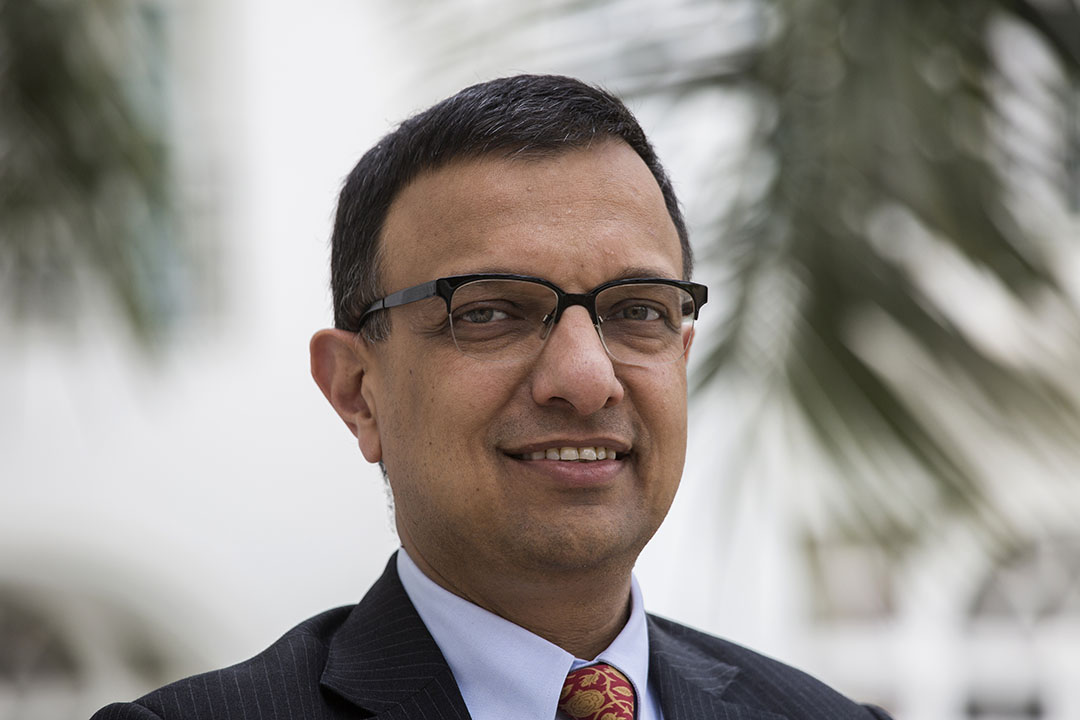
Anubrata Biswas is the MD & CEO of Airtel Payments Bank.
Airtel Payments Bank is a fully digital and paperless bank.
It offers quick and paperless account opening using Aadhaar based e-KYC i.e no documents are required, only the customer’s Aadhaar number is sufficient.
It also offers personal accidental insurance of Rs. 1 Lac with every Savings Account.
(b). Paytm Payments Bank

Paytm received approval from RBI to start its Payment Bank in January 2017 and started its operation with first branch coming up in Noida, Uttar Pradesh.
Vijay Shekhar Sharma, founder of One97 Communications (parent company of Paytm) is MD & CEO.
(c). India Post Payment bank

India Post Payment Bank (IPPB) was incorporated as a Public Sector Bank under the Department of Posts with 100% Government of India equity.
First branch of IPPB inaugurated at Raipur and Ranchi on 30th January, 2017 .
IPPB will play a major role in financial inclusion as India Post has about 1,54,000 post offices, of them 90% are in rural areas.
IPPB will set up 650 branches across the country by September 2017.
Payments Banks will thus help expand the potential of financial inclusion in the economy.
MD & CEO - Suresh Sethi
(d). Fino Payments Bank

The first payments bank to go live with 410 branches and more than 25,000 banking points on day one.
The bank was incorporated on 4th April, 2017 with the name Fino Payments Bank Limited.
MD & CEO - Rishi Gupta
Headquarters - Mumbai
(e). Aditya Birla Idea Payments Bank
Aditya Birla Idea Payments Bank Ltd has commenced operations as a payments bank with effect from February 22, 2018.
MD & CEO - Sudhakar Ramasubramanian
Headquarters - Mumbai
(f). Jio Payments Bank

Jio Payments Bank is an Indian payment bank that started operating in 2018.
MD & CEO - H. Srikrishnan
Headquarters - Mumbai
------------------------------------------
RBI Steps Towards Financial Inclusion : Small Financia Bank
Even after more than 65 years of India's Independence, there are so many people who are still not using banking services. They do not have accounts in banks, even do not hold any identity proof and still making the transaction with the old methodology. Hence, they are unable to access any financial products and services provided by banks or government.
In 2004, RBI formulated Khan Commission for incorporating financial inclusions. To practice financial inclusion, RBI has instructed all the banks to provide basic banking facilities like deposit, withdrawal, savings, and loan to all citizens with minimum documentation i.e. KYC (Know Your Customer) norms either with zero or minimum balance accounts.
The government is trying to provide basic banking facilities to the weaker sections of our society so as to include them in the banking era. Only basic banking facilities can attract them to open their accounts in banks. Even with minimum KYC norms, if banks are not available in rural areas, opening an account would again be a big concern. RBI is trying to solve this problem by including the Business Correspondents (BC) to facilitate banking services in those areas where banks are either unable to open or cannot operate their branches due to cost constraints.
The idea of Payment Banks and Small Banks are unique contributions of our Central Banker which will promote Economic Development and Rural Banking in our backward economy. We can say, a revolution will take place in Indian Banking industry which will further increase Financial Inclusion in our country. Both Small and Payment Banks are the future of the banking sector and can easily achieve Financial Inclusion.
Small Finance Bank
A Step towards Financial Inclusion
On 16th September 2015, the Reserve Bank of India (RBI) had granted 'in-principle' approval to the 10 applicants to set up Small Finance Banks. The RBI had received 72 applications for setting up small finance bank licenses. Last time, in 2014 RBI granted licenses to open Private Banks to two applicants: IDFC Ltd. & Bandhan Microfinance. The “in-principle” approval granted will be valid for 18 months to enable the applicants to comply with the requirements under the Guidelines and fulfill other conditions as may be stipulated by the RBI.
Following are the list of selected applicants
1. Au Financiers (India) Ltd., Jaipur
2. Capital Local Area Bank Ltd., Jalandhar
3. Disha Microfin Private Ltd., Ahmedabad
4. Equitas Holdings P Limited, Chennai
5. ESAF Microfinance and Investments Private Ltd., Chennai
6. RGVN (North East) Microfinance Limited, Guwahati
7. Suryoday Micro Finance Private Ltd., Navi Mumbai
8. Ujjivan Financial Services Private Ltd., Bengaluru
9. Utkarsh Micro Finance Private Ltd., Varanasi
10. Janalakshmi Financial Services Private Limited, Bengaluru
Note: The RBI issued a license to the bank under Section 22(1) of the Banking Regulation Act, 1949, to carry on the business of small finance bank (SFB) in India.
Background – Finance Minister Arun Jaitley announced in the Union Budget for 2014-2015 that - RBI will create a guideline for licensing small banks and payment banks. These banks will provide basic banking facilities to the small businesses, the unorganized sector, low-income households, farmers, and the migrant workforce in both urban and rural areas.
On 27th November 2014, the Resave Bank of India (RBI) released the guidelines for Licensing of Small & Payments Banks. RBI received 72 applications for small finance banks and 41 applications for payments banks till 3rd February 2015, which included some of India's biggest companies. The idea for these two categories was first mooted by the Nachiket Mor Committee on Financial Inclusion.
Committee on Small Banks - The applications were analyzed and evaluated by an External Advisory Committee (EAC). The EAC for small banks was chaired by Usha Thorat, former deputy governor, RBI.
Committee on Payment Banks - These applications were analyzed and evaluated by an External Advisory Committee (EAC). The EAC Committee for Payment Banks was chaired by Dr. Nachiket Mor, Director, Central Board of the Reserve Bank of India.
Small Banks - The main objective of Small Bank is to accelerate the initiative of financial inclusion in the rural areas. Also, such banks will deliver all kind of basic banking services such as deposits, lending, and supply of credit to small farmers, micro and small industries, the unorganized sector, and low-income sections of the population through high technology-low cost operations.
Eligibility criteria for Small Banks:
1. Resident individuals with 10 years of experience in banking and finance, companies and Societies will be eligible as promoters to set up small banks.
2. Existing Non-Banking Finance Companies (NBFCs), Micro Finance Institutions (MFIs), and Local Area Banks (LABs) that are owned and controlled by residents can also opt for conversion into small finance banks.
3. Promoter/promoter groups should be ‘fit and proper’ with a sound track record of professional experience or of running their businesses for at least a period of five years in order to be eligible to promote small finance banks.
Other Key guidelines and other conditions to set Small Finance Bank:
1. The small bank shall be registered as a public limited company under the Companies Act, 2013.
2. The new banks will have to use the words ‘small finance banks’ in its name.
3. Capital requirement - The minimum paid-up capital requirement for small banks is Rs. 100 crore.
4. Can provide basic banking activities – The small banks accept deposits as well as can offer loan products. Small banks can accept fixed deposits (FDs), term deposits, recurring deposits (RDs) and any non-resident Indian deposits.
5. Promoter's contribution: Promoter contribution would be at least 40 percent for the first five years. Excess shareholding should be brought down to 40 percent by the end of the fifth year, to 30 percent by the end of 10th year and to 26 percent in 12 years from the date of commencement of business
6. Foreign shareholding: The foreign shareholding in the small finance bank would be as per the Foreign Direct Investment (FDI) policy.
7. They cannot set up subsidiaries to undertake non-banking financial services activities.
8. The maximum loan size and investment limit exposure to single/group borrowers/issuers would be restricted to 15 percent of total capital funds.
9. Loans and advances of up to Rs 25 lakhs, primarily to micro enterprises, should constitute at least 50 percent of the loan portfolio.
10. For the first three years, 25 percent of branches should be in unbanked rural areas.
11. For the initial three years, prior approval will be required for branch expansion.
12. The small finance banks will be required to extend 75 percent of its Adjusted Net Bank Credit (ANBC) to the sectors eligible for classification as priority sector lending (PSL) by the Reserve Bank.
As of now, 10 Small finance banks started their banking operations which are as follows -
1. Capital Small Finance Bank (India's first small finance bank) - Capital Small Finance Bank (formerly Capital Local Area Bank Ltd) is India's first small finance bank started its banking operations in April 2016 in Jalandhar, Punjab. The bank got the license of Small Finance Bank from Reserve Bank of India (RBI) in March 2016.

Sarvjit Singh Samra, Managing Director of Capital Small Finance Bank.
Headquarter of Capital Small Finance Bank – Jalandhar, Punjab.
Tagline - Vishwas Se Vikas Tak
2. Equitas Small Finance Bank (formerly Equitas Holdings P Limited) started its banking operations with 3 branches in Chennai in September 2016. The bank got the license of Small Finance Bank from Reserve Bank of India (RBI) in July 2016.

PN Vasudevan is the Managing Director & CEO of Equitas Small Finance Bank.
Headquarter of Equitas Small Finance Bank – Chennai, Tamil Nadu.
Tagline - Its Fun Banking
3. Utkarsh Small Finance Bank (formerly Utkarsh Micro Finance) started its operations with five branches across Varanasi, Patna, Delhi-NCR, and Nagpur in January 2017. The bank got the license of Small Finance Bank from Reserve Bank of India (RBI) in November 2016.

Govind Singh is the Managing Director & CEO of Utkarsh Small Finance Bank.
Headquarter of Utkarsh Small Finance Bank – Varanasi, UP
Tagline - Apki Umeed Ka Khata
4. Suryoday Small Finance Bank (formerly Suryoday Micro Finance Ltd) started its banking operation in January 2017 in Belapur, Navi Mumbai. The bank got the license of Small Finance Bank from Reserve Bank of India (RBI) in November 2016.

Baskar Babu Ramachandran is the Managing Director & CEO of Suryoday Small Finance Bank.
Headquarter of Suryoday Small Finance Bank – Belapur, Navi Mumbai.
Tagline - A Bank of Smiles.
5. Ujjivan Small Finance Bank (subsidiary of Ujjivan Financial Services Ltd) started its banking operations in February 2017 in Bengaluru, Karnataka. The bank got the license of Small Finance Bank from Reserve Bank of India (RBI) in November 2016.

Samit Ghosh is the Managing Director & CEO of Ujjivan Small Finance Bank.
Headquarter of Ujjivan Small Finance Bank – Koramangala, Bengaluru, Karnataka.
Tagline - Bharosa, Aap Ke Bharose Par
6. ESAF Small Finance Bank (formerly ESAF Microfinance and Investments Private Ltd.) started its banking operations in Thrissur, Kerala in March 2017. The bank got the license of Small Finance Bank from Reserve Bank of India (RBI) in November 2016.

K Paul Thomas is the Managing Director & CEO of ESAF Small Finance Bank.
Headquarter of ESAF Small Finance Bank – Thrissur, Kerala.
ESAF will be the first bank to be given a banking license in Kerala since independence.
Tagline - Joy of Banking
7. Au Small Finance Bank started its banking operation as a Small Finance Bank in April 2017. The bank got the license of Small Finance Bank from Reserve Bank of India (RBI) in December 2016.

Sanjay Agarwal is the Managing Director & CEO of Au Small Finance Bank.
Headquarter of Au Small Finance Bank – Jaipur, Rajasthan.
Tagline - Chalo Aage Badhe
8. Fincare Small Finance Bank (previously known as Disha Microfin Limited) started its banking operations in September 2017, with about 25 operational branches across Gujarat, Tamil Nadu, Karnataka and Andhra Pradesh. The bank got the license of Small Finance Bank from Reserve Bank of India (RBI) in May 2017.

Rajeev Yadav is the Managing Director & CEO of Fincare Small Finance Bank.
Headquarter of Fincare Small Finance Bank – Bengaluru, Karnataka.
Tagline - Banking on More.
9. North East Small Finance Bank Limited started its operations as a small finance bank in October 2017. The Rashtriya Gramin Vikas Nidhi Microfinance Limited-- North East (RGVNMFL-NE), the promoter of North East Small Finance Bank, got the license of Small Finance Bank from Reserve Bank of India (RBI) in March 2017.

Rupali Kalita is the Managing Director of North East Small Finance Bank.
Headquarter of North East Small Finance Bank – Guwahati, Assam.
Tagline - Your Door Step Banker
10. Jana Small Finance Bank Limited started its operations as a small finance bank in March 2018. Janalakshmi Financial Services Private Limited, Bengaluru was one of the ten applicants which were issued in-principle approval for setting up a small finance bank, as announced in the on September, 2015.
Ajay Kanwal is the Chief Operating Officer of Jana Small Finance Bank.
Headquarter of Jana Small Finance Bank – Bengaluru
Tagline - Paise Ke Kadar
Difference between Small & Finance Bank
Small Banks
1. Small Finance Bank can accept deposits as well as can offer loan products
2. Small banks can accept fixed deposits (FDs), term deposits, recurring deposits (RDs) and any non-resident Indian deposits.
3. Small Finance Banks will provide banking services to small farmers, micro and small industries, the unorganized sector.
Payment Banks
1. Payments Bank cannot lend money to the people.
2. Payments banks can’t accept fixed deposits (FDs), term deposits, recurring deposits (RDs) and any non-resident Indian deposits.
3. Payment Banks will provide banking services to migrant labor workforce, low-income households, small businesses, other unorganized sector entities and other users.
4. Payments banks can open small savings accounts and accept deposits of up to Rs.1 lakh per individual.
5. Payments banks can issue debit cards but they are not eligible to provide credit card facilities.
6. Payments Banks are allowed to set up their own ATMs (automated teller machines).
>>>>>>>>>>>>>>>>>>>>>>>>>>>>>>>
Popular Posts
-
The Megalithic Background Megalith graves were encircled by big pieces of stones. They also contained pottery and iron objects buried with t...
-
The Rise and Growth of the Gupta Empire Background After the fall of Mauryan empire, the Kushans in the North and Satavahanas in the south h...
-
The history of the later Vedic period is based mainly on the Vedic texts which were compiled after the age of Rig Veda. 1. Later Vedic Tex...
-
Jahangir (1605 - 1627) Jahangir came to the throne in 1605. He issued 12 ordinances. He established Zanjir-il-Adal – Chain of Justice in A...
-
In this article, we have explained Northern India of 8th - 10th century. Many questions are asked about Palas, Pratiharas, and Rashtrakutas ...
-
The Organization of the Parliament The Parliament consists of the President, the Lok Sabha and the Rajya Sabha. Lok Sabha is the Lower House...
-
Heat energy is generated when current flows through a conductor. The heating effect of an electric current depends on below-given factors: T...
-
तत्व यौगिक एवं मिश्रण विज्ञान कि वह शाखा जिसमें हम विभिन्न प्रकार के रसायनों एवं उनकी अभिक्रियाओं का अध्ययन करते है, रसायन विज्ञान कहलाती है...
-
The remnants of the library of Nalanda, built in the 5th century BCE by Gupta kings. It was rebuilt twice after invasion, first after an inv...
-
Main Passes of Himalayas Aghil Pass: Situated to the north of K2 in the Karakoram. Joins Ladakh with the Xinjiang(Sinkiang) Province of ...
Featured post
Business Communication – Introduction Notes Business Communication is the ability of a group of individuals to speak the same langu...